Writing About Writing
-
Book Review: Huna: A Memoir of Revolution, Prison, and Becoming by Abdelrahman ElGendy
Read more: Book Review: Huna: A Memoir of Revolution, Prison, and Becoming by Abdelrahman ElGendyHuna: A Memoir of Revolution, Prison, and Becoming is Abdelrahman ElGendy‘s story about his experience being incarcerated at the age of 17 for being part of a protest against the authoritarian government in Egypt. Watching the protest from a distance, he and his father were swept up in the police enforcement and arrested for participating.…
-
Writing at GoingEast.ca
Read more: Writing at GoingEast.caI’m focusing my writing these days on getting the first draft of my book – Going East: An unconventional bike ride across Canada finished. I’ve started providing updates over at my Going East Blog – and ask that you follow me over there rather than here if you want to follow my progress. My first post is: Going…
-
Proselytize versus Testify
Read more: Proselytize versus TestifyI recall being asked to read a piece for a writers group, where the author was concerned about sounding preachy. It was in that context where it became clearer to me what causes something to feel “preachy” versus the sharing of a personal experience.
-
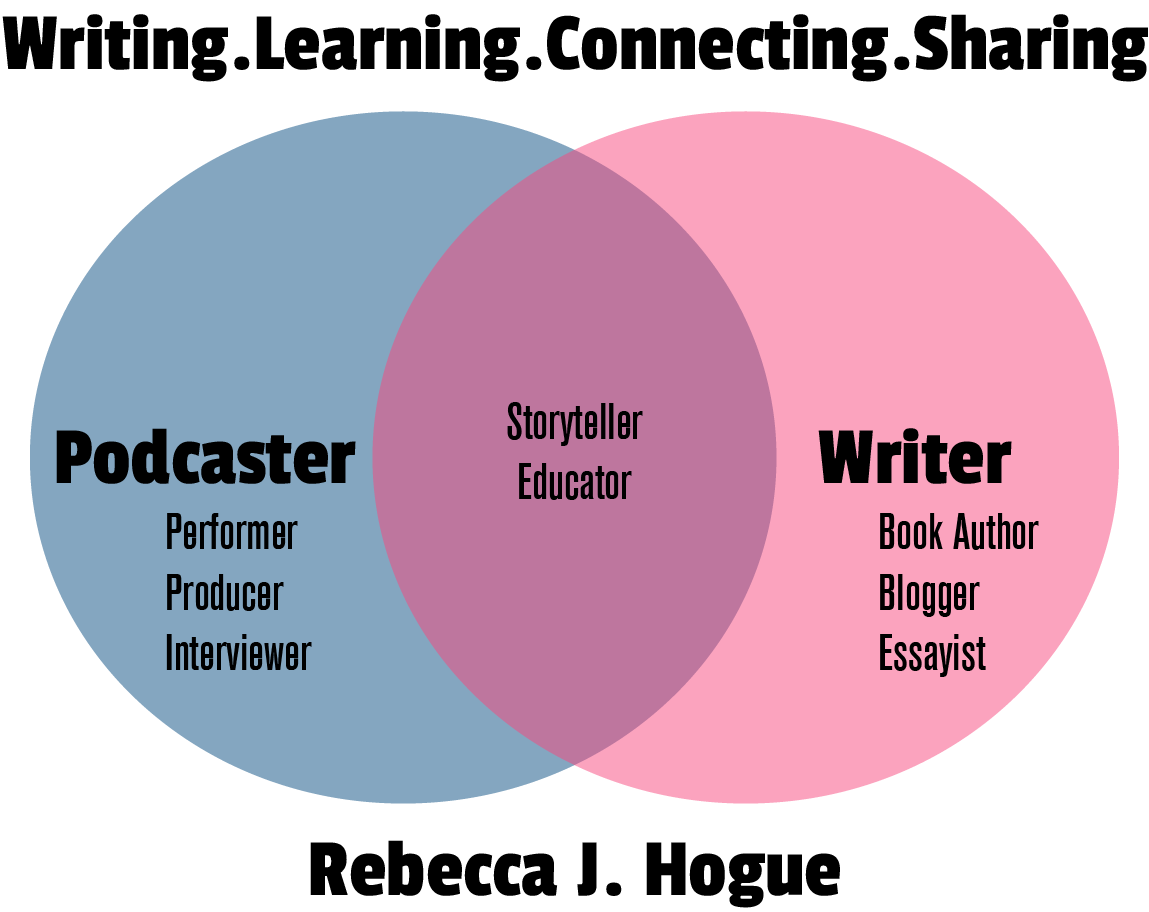
Who am I?
Read more: Who am I?When I was reading the book On Brand, one of the activities is to create a Venn Diagram of who you are. I had initially done this activity when I was teaching, so Lecturer was a big part of the diagram. I revisited the diagram to align with my current goals as a creator. One…
-
Supporting Artists, Supporting Me
Read more: Supporting Artists, Supporting MeIf my work has value for you, I would truly appreciate a small contribution on Patreon. And more broadly, I encourage you to support other artists whose work enriches your life. Whether it’s Patreon or another platform, even a small contribution can make difference in an artist’s life.
-
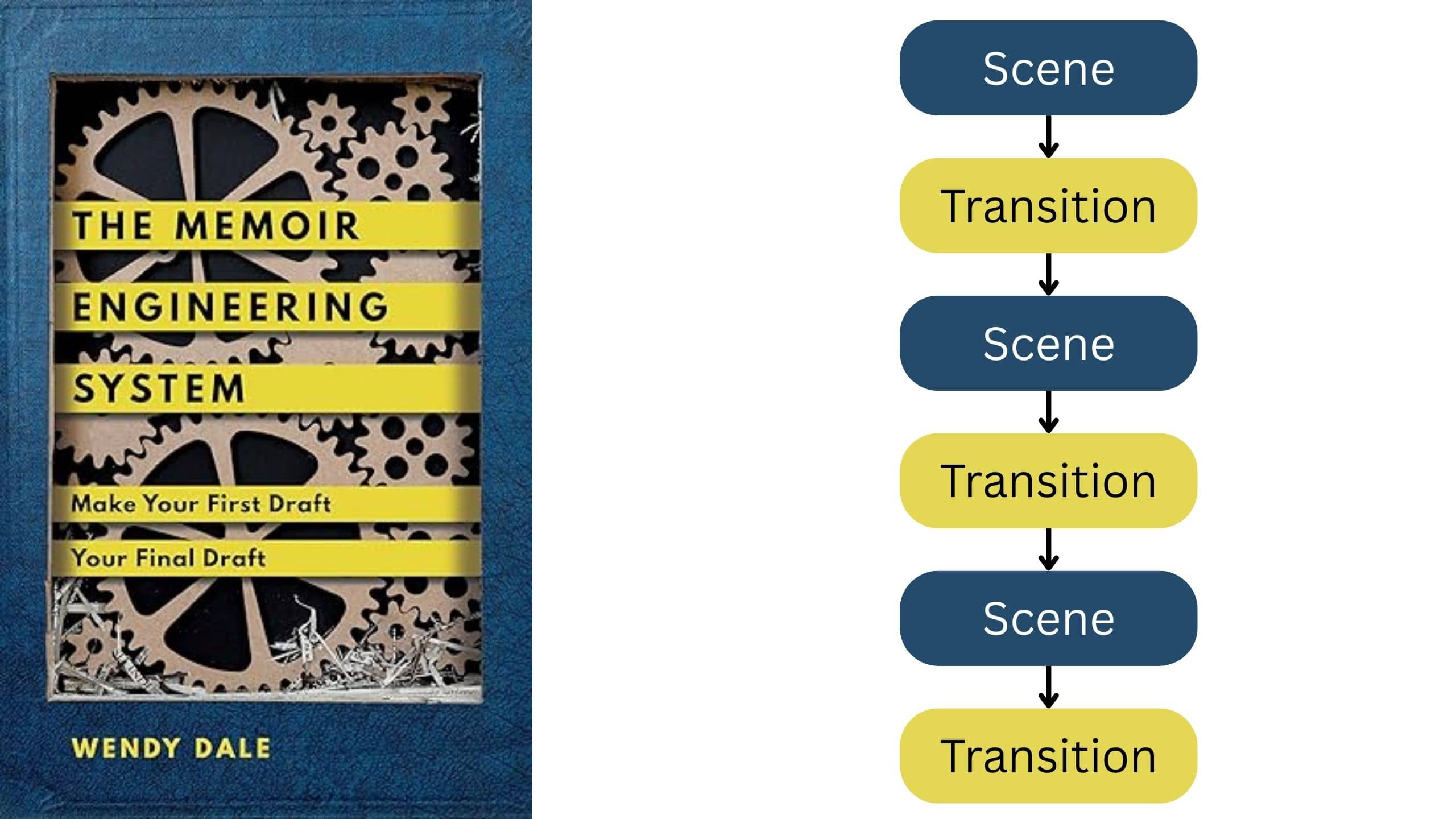
Book Review: The Memoir Engineering System: Make Your First Draft Your Final Draft
Read more: Book Review: The Memoir Engineering System: Make Your First Draft Your Final DraftThe Memoir Engineering System: Make Your First Draft Your Final Draft by Wendy Dale. Do I believe that my first draft will be my final draft? Absolutely not; however, I did find a lot of useful advice in this book. I’ve read a lot of books about writing craft. This is one of the few…
-
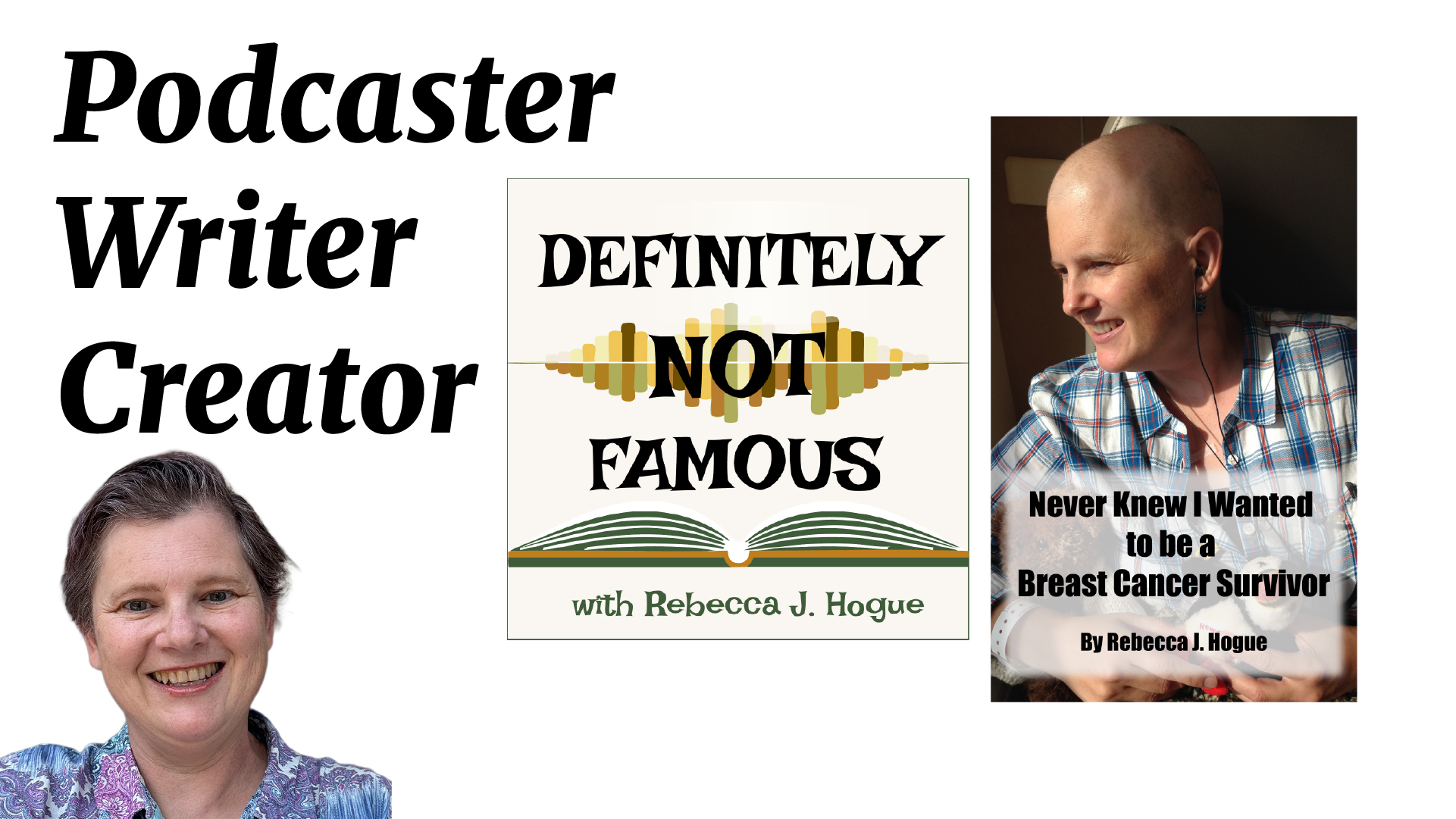
Definitely Not Famous
Read more: Definitely Not FamousI did this thing. I started a new podcast. Definitely not famous: More extra than ordinary.
-
Past-future and Present-Past
Read more: Past-future and Present-PastI am writing the Going East book in present tense. This brings the reader along with us, as if they are sitting on the bicycle seat along for the ride. I recall my English classes, being taught not to mix my tenses. And yet, as a creative writer, that is exactly what I’m learning to…
-
Truth In Memoir
Read more: Truth In MemoirWhen writing memoir, where do you draw the line? Can dialogue be made up if it helps propel the story forward, and the essence of it is true? When you read memoir, does dialogue make you trust the author less?
-
Free eBook for 2 Days
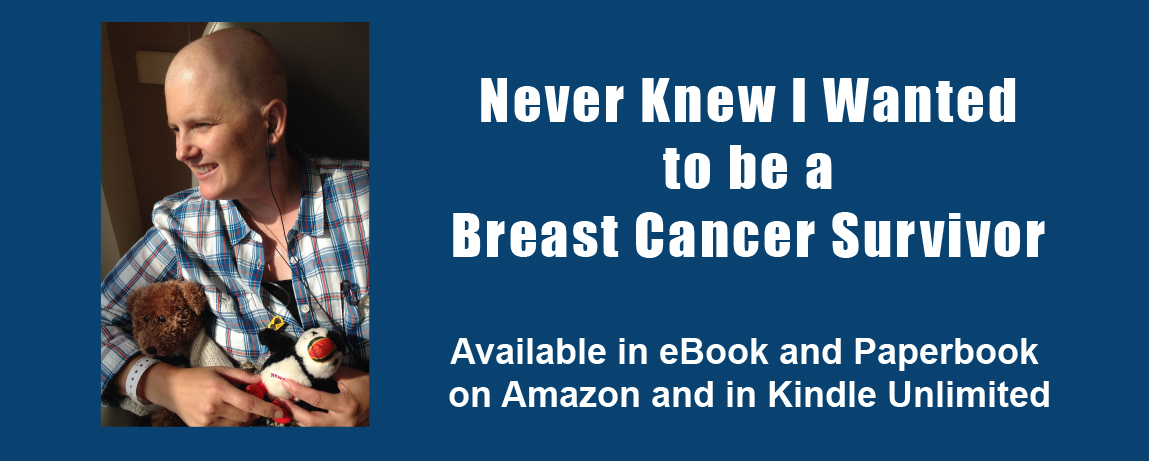
Read more: Free eBook for 2 DaysThe eBook version of my book Never knew I wanted to be a breast cancer survivor, will be free to download on Amazon today (Thursday) and tomorrow (Friday). Also, if you are Kindle Unlimited, you can read it anytime for free. If you read it, I ask that you please, please, pretty please, leave an…
-
The Fantastic Grown-Up Book Fair
Read more: The Fantastic Grown-Up Book FairI did my first real author reading at a conference on Saturday – the Fantastic Grown-up Book Fair happened to be located about a half hour drive from my house. I decided to sign up to do an author reading – figuring I might as well try jumping into the community of local authors. There…
-
Reconciliation
Read more: ReconciliationAs part of my reconciliation responsibility, I am committing to updating my land acknowledgement on an annual basis. As a descendant of a settler, it is my responsibility to learn more about the Indigenous communities who walked this land well before my ancestors arrived. Ever Forward Books is located in Sin So’sepe’katik (sin-SO-say’bay-a-tik), the ancestral and unceded…
-
South Away: The Pacific Coast on Two Wheels
Read more: South Away: The Pacific Coast on Two Wheels“The road immediately grows darker under the mountain’s shadow. Evergreens shade the highway; what little light we receive comes through the narrow sliver of leaden sky overhead…while the highway shoulder is thinner than a slice of toast. Alisha and I switch on our bike lights, but compared to car headlights our beams appear pitiful. As…
-
The Cost of a Can of Beans
Read more: The Cost of a Can of BeansCycling along the northern shore of Lake Superior between Thunder Bay and Wawa, I notice how few towns and services there are. We can ride for four to six hours without passing a gas station or convenience store, making me appreciate every mom-and-pop shop that appears out of nowhere on these long stretches of lake,…
-
Joy Ride
Read more: Joy RideKristen Jokinen’s Joy Ride is a memoir chronicling a 21-month cycling journey from Alaska to Argentina—the Americas from North to South, with her husband, Ville. Throughout the over 18,000 miles of their journey, they endured bad weather, rough roads, and dog attacks. Primarily living in their tent, on a limited budget, they met many people as they…
-
About Editing
Read more: About Editinghave wanted to demystify the editing process for a while. I find that the term “editing” has been used as one thing, and “editor” as one person, but that doesn’t align with my experience in either technical writing or creative nonfiction. I wanted to get a better sense of the editing process from a book…
-
Writing Tools: Scrivener and Bookends
Read more: Writing Tools: Scrivener and BookendsPart of my preparation for the start of grad school – in case you missed it, I’m starting an MFA in Creative Nonfiction at the University of Kings College this summer – is to figure out the best tools to support and organize my writing. When working on my PhD and my memoir, I use…
-
Dialogue in Sweet Ride
Read more: Dialogue in Sweet RideI recently saw Sweet Ride as a musical before reading the book—a reversal of my usual preference. Set in 1943, the story follows four women cycling over 500 miles from Nova Scotia to PEI during WWII. The theatre production was delightful, but the book gave me more to chew on—especially as a writer. While I…
-
In My Own Moccasins by Helen Knott
Read more: In My Own Moccasins by Helen KnottHelen grew up in Northeastern BC. I grew up in Northwestern BC. I know the towns and roads she mentions in the book. And yet I know so little about the life that she led. The colonial town of Kitimat, where I lived, was fifteen kilometres from the reservation of Kitamaat, home of the Haisla…
-
It’s not you, it’s me: Reflections on memoirs I didn’t finish
Read more: It’s not you, it’s me: Reflections on memoirs I didn’t finishI’ve also been learning to give myself permission not to finish books. Even more, I’m now allowing myself to write about books I don’t like. That part is tricky. I don’t want to write negative reviews, especially when my lack of engagement doesn’t necessarily mean the book is bad. More often than not, it just…
-
The Three-Body Problem In Memoir Writing
Read more: The Three-Body Problem In Memoir WritingWhat I took from his talk, my own interpretation, even if it diverges from his intention, is that we all write memoir from three selves. The first self is who you were when the events happened. Writing from that space requires remembering not just the facts, but how you felt, thought, and made sense of…
-
On First Drafts
Read more: On First DraftsOne lesson that stayed with me from that first reading was the importance of writing a crappy first draft…For me, the first draft is about getting the ideas out of my head and onto the page. The act of writing itself helps me clarify and organize my thoughts. Until they’re written down, those ideas are…
-
Autoethnography Versus Memoir
Read more: Autoethnography Versus MemoirThe first difference for me is in the audience. Autoethnography is written for academics. Memoir is generally written for a wider audience – the general public or a specific subset of the general public. The real difference is in the purpose. Autoethnography at its heart is about the analysis of the experience. Memoir is about…
-
University of King’s College
Read more: University of King’s CollegeI’m thrilled to share that I’ve been accepted into the Master of Arts in Creative Nonfiction program at the University of King’s College. Going back to school is both exciting. I can’t wait to see what I’m going to learn, but also to meet amazing people. My goal with this degree is to finally write…
-
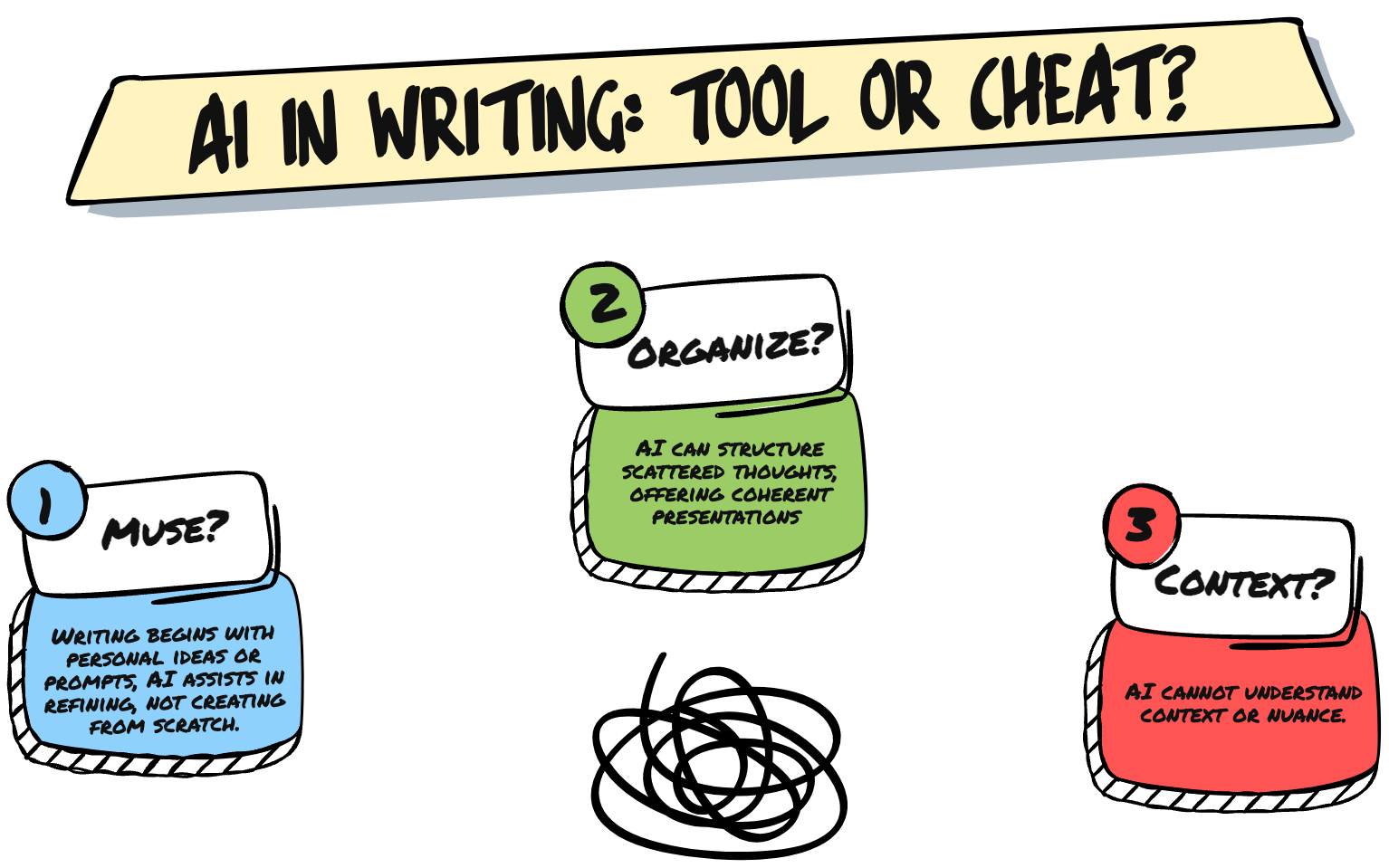
AI Writing Debate: Tool or Cheat?
Read more: AI Writing Debate: Tool or Cheat?There is an ongoing debate—or perhaps more accurately, a mix of debate and shaming—around the use of AI in writing. As a writer, I find myself asking: If I use AI, am I a cheat? Does it matter whether my writing was assisted by AI?
-
Narrative transitions
Read more: Narrative transitionsThis isn’t your typical book review. I’m not going to summarize the plot in detail; instead, I’ll share why I recommend the book and, more importantly, what I learned about writing by reading it. Because right now, I’m reading (and re-reading) memoirs with a purpose: to improve my own storytelling.
-
Turning off predictive text
Read more: Turning off predictive textI tried writing this morning and I found a “new” feature in my writing app, which is current Scrivener. All of a sudden, Scrivener had predictive text. This is a feature that is sometimes useful when you are writing a text or email on your phone. It helps you write something quickly when your reply…
-
Staying Current as an Instructional Designer: The Values I Lean On
Read more: Staying Current as an Instructional Designer: The Values I Lean OnOne of the questions my students often ask me is: How do you stay current with trends in instructional design? As someone who primarily teaches instructional design these days, staying up to date is a crucial part of my work. It’s not just about keeping my courses relevant; it’s about ensuring that I can guide…
-
Descriptive Audio
Read more: Descriptive AudioI enjoy listening to TV shows while I cook and relax, often doing jigsaw puzzles on my iPad. A feature I’ve found incredibly useful is descriptive audio. Similar to closed captions for the hearing impaired, descriptive audio narrates the visual elements crucial to the storyline. This doesn’t mean it describes everything; it selectively enhances understanding…
-
Exploring AI
Read more: Exploring AIAs an instructional designer, I understand the dilemma of deciding on a policy regarding the use of AI in our courses. The options presented – either banning AI or allowing it with attribution – seem limiting and don’t fully capture the potential of AI as a valuable tool for instructional designers. Personally, I believe that…
-
ChatGPT and Personalized Learning
Read more: ChatGPT and Personalized LearningFeature image created by Adobe Firefly. When I ask ChatGPT about the benefits of AI for instructional design, one of the things it calls out is personalized learning. “Personalized Learning Experience: ChatGPT can provide a highly personalized learning experience by tailoring responses to the individual learner’s needs and preferences. It can adapt the content and…
-
ChatGPT and Interviewing Learner Personas
Read more: ChatGPT and Interviewing Learner PersonasFeature image created by DALL-E 2 an AI: a female instructional designer interviewing a chatbot with a question mark in the foreground As I review and prepare lessons for the next week of class, I ask myself what value can ChatGPT add to either my class or the instructional design process that we are exploring…
-
Navigating the Healthcare System
Read more: Navigating the Healthcare SystemThis post is a continuation on my discussion about Patient Health Literacy. The narrative that resulted from this study has been published on Amazon. See my Memoir page. The original source that I used for my study can be found at https://bcbecky.com. In reviewing the posts categorized as Navigating the healthcare system, I constructed the following themes: (1) learning…
-
Learning about the disease
Read more: Learning about the diseaseThis post is a continuation on my discussion about Patient Health Literacy. The narrative that resulted from this study has been published on Amazon. See my Memoir page. The original source that I used for my study can be found at https://bcbecky.com
-
ChatGPT and Instructional Design
Read more: ChatGPT and Instructional DesignI asked ChatGPT to write me a blog post about teaching instructional design. It clearly writes blog posts that are intended to be advertisement type material. Here is the post that it wrote: The Importance of Teaching Instructional Design: Preparing Students for a Career in E-Learning and Educational Technology Instructional design is the process of…
-
Developing Coping Mechanisms
Read more: Developing Coping MechanismsThis post is a continuation on my discussion about Patient Health Literacy. The narrative that resulted from this study has been published on Amazon. See my Memoir page. The original source that I used for my study can be found at https://bcbecky.com. From among the 237 blog posts, I coded 163 (68.8%) with the category,…
-
Never knew I wanted to be a breast cancer survivor
Read more: Never knew I wanted to be a breast cancer survivorI have finally taken the leap and published my breast cancer memoir: Never knew I wanted to be a breast cancer survivor. This memoir began as a Autoethnographic PhD study. I analyzed the first year of blog posts written on BC Becky, my breast cancer blog. My analysis involved constructing themes. The themes helped me…
-
I’m officially a podcaster!
Read more: I’m officially a podcaster!In September I launched Demystifying Instructional Design – a podcast where I interview instructional designers about what instructional designers do. I’ve just finished posting my 9th episode! Initially I didn’t feel like I could call myself a podcaster, because I just started. Now that I have almost a full season under my belt, I feel…
-
My new podcast
Read more: My new podcastI haven’t been blogging much lately. In part this is because I have a new project that is occupying my spare time! I can no officially call myself a ‘podcaster’. I have launch Demystifying Instructional Design, a podcast where I interview instructional designers about different aspects of their jobs. My first round of interviews focused…
-
Five tips for online instruction efficiency
Read more: Five tips for online instruction efficiencyVery little is written about how to make a better instructor experience. I figured I’d share a few of my tips for instructor efficiency. What tips do you have to improve instructor efficiency when teaching online?
-
Preparing online teams for success
Read more: Preparing online teams for successI’ve been teaching online for more than five years and most of my courses involve a significant teamwork project. In my course on the Design and Instruction of Online Courses course, I highlight to my students that most students have never been taught how to work in an online team. They may have learned how…
-
Activity time in the online classroom
Read more: Activity time in the online classroomOne of my students this semester made an interesting observation that had not occurred to me.
-
What should go into an instructional designer’s portfolio?
Read more: What should go into an instructional designer’s portfolio?The portfolio landing page (which generally is a person’s “about me” page), should have an appealing and modern aesthetic. It should be clean and uncluttered (less is more) and an intuitive interface. The navigation should be simple and well structured.
-
How do you describe something you chose not to finish?
Read more: How do you describe something you chose not to finish?I spend the better part of the last 9 years working on a PhD. A lot happened in that window. A lot of life changing transitions. I was diagnosed with breast cancer, I lost my father, and then a year and a half later I lost my mother. These each had a profound impact on…
-
A model for sync sessions in the online classroom
Read more: A model for sync sessions in the online classroomIntroduction/welcome to the session topic. 10-minute breakout in small groups. Presentation / Q&A. 15-minute breakout into small groups. Debrief small group activity, close.
-
Tips for socializing on Zoom (or other video conference platforms)
Read more: Tips for socializing on Zoom (or other video conference platforms)1 – keep the size reasonable (4-6 works best) 2 – Find a comfortable seat …
-
Let’s stop calling it online learning – it is something different …
Read more: Let’s stop calling it online learning – it is something different …I listened to a great #unboundeq conversation the other day (https://www.youtube.com/watch?v=IG64Fx0vv8M). The thing that has stuck with me the most is that we should stop calling this sudden transition “online learning” as it conflates all the work of those of us who work in online learning. What we are dealing with is learning during a…
-
What can online group work learn from Sociocracy?
Read more: What can online group work learn from Sociocracy?I’ve been taking a course on Sociocracy – Sociocracy Empowered Learning Circles by Sociocracy For All – Sociocracy is an interesting way of governing an organization. It is sometimes also called Dynamic Governance. Why would I be taking a course on sociocracy? I recently joined an organization that uses sociocracy as its way of governing.…
-
I used to see blog posts
Read more: I used to see blog postsI used to see blog posts In everything I did While walking the words would come to me While showering the words would come to me While sleeping the words would come to me But today the world is silent Friends lost Parents lost There is a silence in my world All the while, The…
-
My #DevLearn conference insights – Day 2 & 3
Read more: My #DevLearn conference insights – Day 2 & 3Keynote Augmented Human: How Technology is shaping the new reality What might not be clear from the title is that this session was all about Augmented Reality (AR). This was presented by Dr. Helen Papagiannis who is author of the book Augmented Human. I didn’t take a lot of notes during this session so I…